

Indie Film Needs
Audience Infrastructure
17/June/2026
If audience discovery is broken, the next challenge is building better pathways between meaningful films and the audiences who would care about them.
The response to my last piece on independent film’s discovery problem confirmed something important: a lot of people recognise that many good independent films are not failing because they are bad. They are failing because they are not finding the audiences who would actually care about them.
That distinction matters because it is easy to talk about independent film as if the biggest issue is always funding, and funding is a huge issue. After all, films need money to exist! Crews need paying, development needs time and distribution needs support. Nobody should pretend that independent filmmakers can simply solve everything through optimism and a clever release strategy.
But once a film is funded, made and finished, another problem begins: how does it reach people?
Not just how it gets uploaded, selected, released or listed somewhere. But how does it actually travel? How does it move from a completed film into public awareness? How does it reach the communities, cinemas, critics, programmers and viewers who might respond to it?
That is where the current system feels weakest. Independent film does not only need more funding or more platforms. Pumping money into the film industry without fixing the problem with a clear plan fixes nothing! If real change is to be made, the industry needs better audience infrastructure.
By audience infrastructure, I mean the systems that help filmmakers understand, build and reach audiences before and after release. That could include audience research tools, stronger community screening networks, better links between festivals and regional cinemas, digital discovery platforms for independent film, critic and curator networks, pre-release audience building, and smarter use of data alongside human taste.
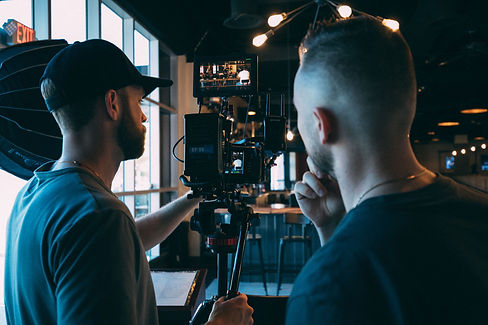
It does not mean turning cinema into a spreadsheet. Because that is a very real fear, and it is understandable. Independent film should not become a box-ticking exercise where every creative decision is reduced to what the market supposedly wants. Some of the best films are unexpected; they do not arrive neatly packaged. They challenge audiences, and they ask for patience, and in doing so, often create their own audience rather than serve an obvious one.
But audience understanding does not have to weaken creativity. Used properly, it could protect it.
The question is not how to make independent films more algorithm-friendly. The question is, how do we give independent films a stronger chance of finding the people who are already waiting for them?
At the moment, too many films are released into uncertainty. A filmmaker might know the story they want to tell. They might know the film's emotional world and why it matters. But they may not have the tools, time or support to understand who the audience is, where that audience gathers, what conversations the film belongs inside, or how demand can be built before release.
This is especially difficult because the old discovery routes no longer work the same way.
Festivals still matter, of course, and critics still matter. Cinemas still matter deeply, and the power of word of mouth still matters! But they no longer provide the same reliable pathway from attention to the audience. A festival premiere can bring prestige, but not necessarily distribution. A strong review can create credibility but not necessarily reach, and a streaming release can provide access but not necessarily visibility.
The challenge is not just visibility, but continuity. A film needs more than one moment; it needs a well-planned route.
This is where people often point to social media. The argument is usually simple: filmmakers can build their own audiences now. They can post online, share trailers, create behind-the-scenes content, grow a mailing list, make TikToks, use Instagram, start conversations and bypass the old gatekeepers.
There is truth in that. Social media can be useful; it can help filmmakers speak directly to audiences, making a small film feel personal and accessible. It can also help build early support, especially when the filmmaker has a clear voice and a story that people connect with.
But social media alone is not audience infrastructure. Attention online is unstable, and algorithms are unpredictable. A post doing well one week means very little the next. Filmmakers are not always marketers, and they should not have to become full-time content creators just to give their work a chance of being seen. If anything, doing so risks distracting the filmmaker from the thing that matters the most, creating a film that is rich in story and connects to its audience!
A viral clip is not the same as a sustainable audience pathway. In fact, social media can sometimes create the illusion of momentum without the structure to convert that momentum into screenings, sales, community engagement or long-term visibility. A filmmaker might get attention, but still not have access to cinemas. They might build interest, but still not have a distributor. They might reach viewers online, but still struggle to turn that interest into a meaningful release. This is why the solution cannot simply be 'post more'. The industry needs to think more seriously about what sits between the film and the audience.
One possible route is to rethink the role of festivals. If festivals are no longer enough on their own as commercial engines, then perhaps they need to become more connected parts of a wider discovery system.
That could mean stronger partnerships between festivals and regional cinemas, so films that connect with audiences at festivals have clearer routes into local screenings afterwards. It could mean festivals sharing more audience insight with filmmakers, not just laurels and quotes. It could mean post-festival release support, where selected films are helped to build campaigns beyond the festival window. It could also mean more community partnerships. A documentary about care, housing, education, migration or grief may have natural audiences in charities, campaign groups, universities, local organisations and professional communities. Dramas rooted in a specific region may have audiences beyond the usual arthouse circuit. Or genre-specific films may have online fan communities that are more powerful than traditional press.
The question is how those connections are found, built and sustained.
At the moment, too much of that work falls on the filmmaker. Often, at the point when they are already exhausted, underpaid and trying to move on to the next project.
That is not a serious system; that is survival!


Better audience infrastructure would mean supporting this work earlier and not waiting until the film is finished. We must start asking from development onwards, who might this film matter to? We should explore what communities might recognise themselves in it. As filmmakers we should examine what cinemas might champion and fit the film we are creating. We should only target festivals that would understand it and writers, critics or curators who could help frame it. Finally, we should actively think about what conversations the film belongs to.
These questions should not replace creative instinct; they should sit alongside it, strengthening it. They should work as the podium which lifts the film up to the people who should see it.
This is also where data could be useful, but only if it is used carefully. The problem with platform data is not that the data itself is bad; the problem is when data becomes too narrow. When it measures clicks, completions and viewing habits but misses emotional connection, cultural value and long-term impact.
Independent film needs a different kind of audience intelligence. Not just “people who watched this also watched that”. More like, who cares about this subject? Where are those communities? What has worked for similar films? Which cinemas support this type of work? Which festivals create genuine onwards momentum? Where are the gaps between interest and access?
That kind of insight could help filmmakers, as well as helping producers and funders. If a team can show not only what a film is but also who it is for and how it might reach them, then the film may become more financeable earlier.
This matters for UK independent film in particular. The UK has a strong production infrastructure. Major productions shoot here; studios are busy, crews are skilled, and inward investment brings work and economic value. But that does not automatically mean domestic independent storytelling is healthy. A country can be excellent at hosting production and still be weak at supporting its own independent films into the world.
That is the question we need to ask more directly. Does the UK have strong enough audience infrastructure for domestic independent film? Not just funds, studios and tax reliefs, but pathways to audiences. Not just ways to make films, but ways to help them live.
Because if those pathways are missing, the result is predictable. Films get made, premiere, receive a small burst of attention, then disappear. Audiences who might have loved them never even hear about them. This leads to filmmakers struggling to build careers, funders becoming cautious, distributors beginning to see risk and the cycle repeating.
The industry should start by treating audience development as part of the creative and financial life of a film from the very beginning, not an afterthought.
That might mean funding audience strategy earlier and supporting producers with better tools. It might mean festivals offering more practical release pathways and developing their support to filmmakers beyond screening. Regional cinemas could work together more closely around independent titles, realising a collective response is better for the industry. We could build more digital spaces where independent films are better curated and not buried beneath everything else; think about platforms similar to MUBI. This could mean valuing critics, programmers and curators as part of the discovery system, not just as decorative extras.
None of this is simple.
But the current situation is not working well enough.
Independent film cannot rely on luck, festival prestige, social media bursts or platform placement alone. We need a more joined-up and structured system. One that understands audiences as people, not just data points. One that recognises that meaningful films often need time, context and care to travel properly.
The future of independent film doesn’t depend only on what gets funded but also on whether we can build better pathways between meaningful films and the audiences who are waiting for them. But if we are to fix this problem, we must act fast!
